Over the past week I traveled to and from Minnesota for a long-awaited medical appointment, and in the long car ride over began listening again to the French electronic producer and composer Thylacine. There's a spaciousness and sense of movement to Thylacine's music that always helps me feel a bit less unstuck.
The movement embedded in his music is sometimes quite cleverly literal. On the song, "Train", off his 2016 album Transsiberian, Thylacine incorporates the rhythmic thunk of a Trans-Siberian railway car in and out of the background of a melodic electronic composition.
This and other songs were directly composed and recorded all within the confines of a cramped train cabin. The resulting album that Thylacine produced feels minimalist, certainly, but it's also ethereal and spacious and there's a lot of warmth introduced by the incorporation of the field recordings. One of my favorite songs off the album, Poly, also incorporates Bulgarian polyphony.
As Thylacine put it in a release for XXIM records, "As I didn’t have much equipment with me on the train, it’s constructed from fairly simple elements, including a very synthetic ‘false orchestral arrangement’ made with a small midi keyboard on the train."
But that "false orchestral arrangement" later became a performance from a very-real orchestra, when the Orchestre National des Pays de la Loire accompanied Thylacine for the live album, "and 74 Musicians".
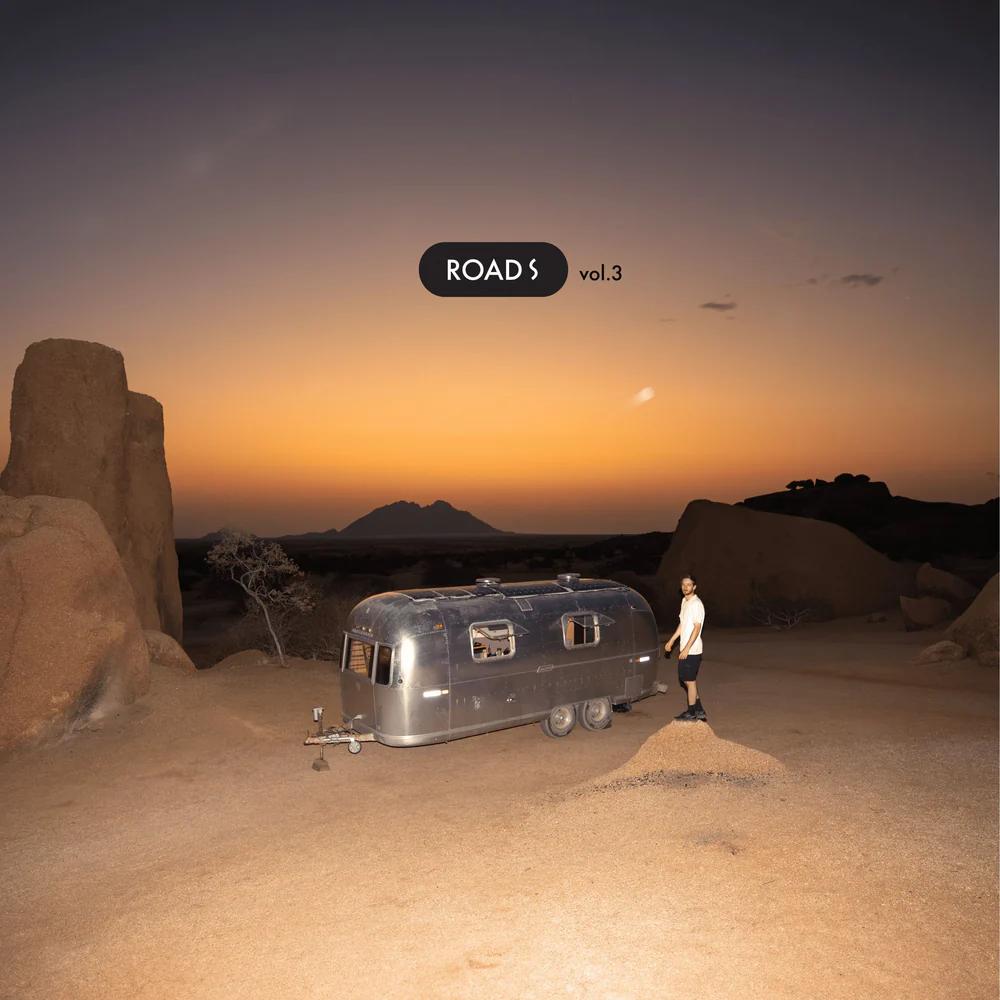
Thylacine has since released several other albums arranged and inspired while on the road. Last year, he released an album, "ROADS Vol 3", that incorporates the singing, sounds, and music of his travels across Namibia in a converted Airstream.
I wanted to write about the album last fall. But I ended up spending a single day writing a draft and then abandoning it. I didn't know if I knew how to convey the complexity of my admiration for it, and also for the ways in which Thylacine's work has sparked curiosity and a sort of quiet contemplation about the community and archival value of informal field recordings like this.
But after learning about the concept of symbolic annihilation during a class on community archives, I think I am slowly finding the words. As the authors of a 2017 paper on community archives and the importance of representation put it, symbolic annihilation is a word for "the ways in which members of marginalized communities are absent, underrepresented or misrepresented in mainstream media and archives."
Academics have subsequently written about how meaningful archiving efforts can be in the face of this sort of institutionalized erasure. When major institutions don't tell a story at all, or — as so often happens in the media — the story they do tell is intentionally sensationalized.
It feels like there's a lot of meaningful nuance in that definition. That there is a difference between sensationalizing the events happening in a community and in making an effort to create an archive that helps others meaningfully connect to history.
When I first began writing about Thylacine, I think I struggled to communicate that nuance. I really liked his most recent album. The musical composition is beautiful: quiet and contemplative and moody and yet hopeful in all the best ways.
The album also prominently features singers from communities such as Ozohere's Himba and Kwado's Mafwe. And in Shark Island (which features a choir of Nama singers) the artist uses electronic music to try to convey a story about intergenerational trauma and genocide.
In the description for the music video for the song (and at the tail end of the video), the artist wrote the following introduction to the work.
Content warning, this includes depictions of racial violence:
Shark island is a small island in Namibia, now connected to the coastal town of Luderitz.
Between 1905 and 1907, it was turned into a concentration camp by the German Empire, at the heart of the genocide of the Herero and Nama peoples.
The camp also served as an early laboratory for what would later become Nzi ideology. Some imprisoned women were forced to “prepare” the skulls of their murdered relatives, by scraping off skin and flesh with shards of glass. These skulls were then sent to German universities to be measured and used as supposed “proof” of white supremacy.
The lyrics of this song were inspired by stories we heard about Shark Island during our stay.
They were reviewed and approved by a Nama chief.
I collaborated for a week with a choir of Nama singers, the Luderitz Rogate Koor, and we recorded the song in Luderitz’s German church, the Felsenkirche, built shortly after the genocide and partially constructed by camp survivors under forced labor.
This isn't Thylacine's own story to tell, but I think it feels meaningful he set out to try to tell a story in close collaboration with individuals living on Shark Island, not simply about them.
And in context of the concept of symbolic annihilation, music here is a storytelling medium that makes these stories accessible — and it prevents them from being forgotten.