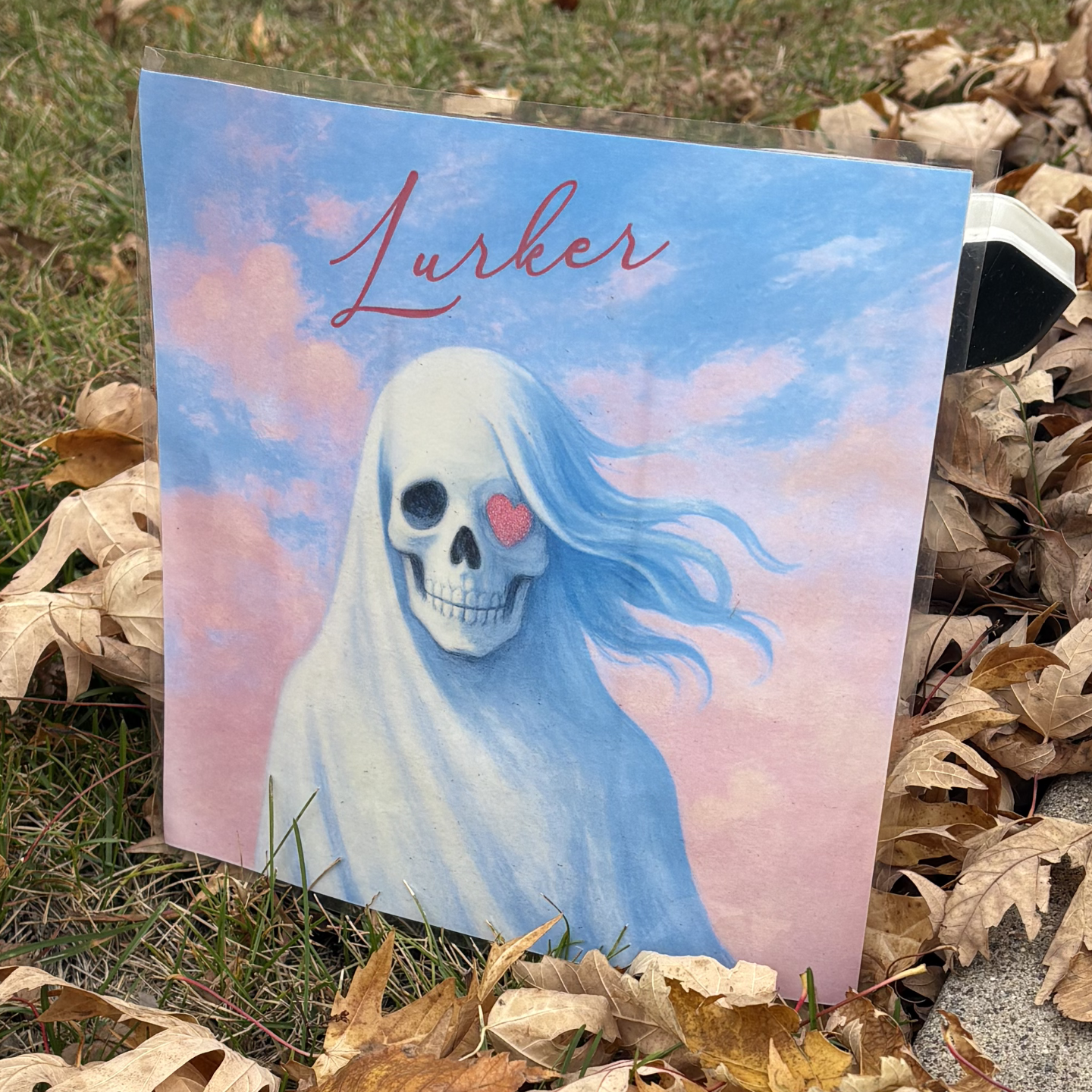
This past fall, a house overlooking Lake Hiawatha in Minneapolis was celebrating a sort of Taylor Swift-embellished version of Halloween.
Every portion of the yard seems to be a tribute to a different portion of Taylor Swift's career or her life — but a spooky, alternate universe version of it.
It's campy as hell, and I love every bit of it. I also can't help but feel that it's an oddly perfect interpretation of the pagan spirit of the season.
Today is the first day of November. The Irish word for November is Samhain — and the name for a festival that traditionally happens on the very first day of the month.
If you're feeling a little bit confused, because you've heard people refer to Halloween as Samhain...
They do. And it's sort of a long story that includes neo paganism and the cross pollination of Irish practices throughout the world. But Halloween is not actually Samhain.
Is it actually the eve of Samhain — or in Irish, Oíche Shamhna. The day when the veil between our world and the otherworld thins, and Irish trickster spirits such as púcas like to cross over and screw with us.
And the next day? That's the beginning of the season of the cailleach.
---
The literal translation that Ó Dónaill’s Irish-English Dictionary provides for a cailleach is "old woman; hag". But in oral storytelling and in literature, it is very commonly used to refer to a witch.
You can spot that association in many different stories archived by the National Folklore Collection at UCD. Including one specific retelling, which details the face-off between a witch and none other than St. Patrick.
It is nothing short of a truly mystifying combination of animism and Christian fan fiction.
"Long ago at the time of Saint Patrick three witches, An Cailleach Bhéara, Cailleach an Dhaingean, agus Cailleach Bhóilis lived. At that time Saint Patrick was teaching the true faith in Munster, but the Cailleach Bhéara would (not) believe that God was there, or that He was the maker of the world.
About a few weeks after Saint Patrick was preaching to her, she went to his house and stole a few holy books he had. St. Patrick following her, struck her with his wand, but not before she had jumped from Sgíac, to Coolagh and from there to Kilcatherine. It was while she was taking the last span that St. Patrick's rod struck her, and she is now in the form of a rock in Kilcatherine with the basket of books on her back. The print of her foot is in the middle of a flat stone, about five feet long by six feet wide in Coolagh, and it is full of water both Summer and winter."
I can't help but feel that "Christian fan fiction" was exactly the intention of this story, and something that occurs again and again in Irish literature. Ireland has an oral storytelling tradition, and when stories began to be written down — in manuscripts such as Lebor Gabála Érenn (the Book of Invasions) — it feels generally agreed up on that writers did so in a way that explicitly attempted to embed medieval Christian pseudo-histories within an inherently pagan Irish landscape.
More or less so that people could understand, as this story itself states, that Christianity is the "true faith" and also that empowered witches who carry knowledge are bad and stuff.
I feel like I can't possibly do justice to the complexity of that topic, other than to note that it's tragic to me that just like in places like Salem, Massachusetts it's possible that the scariest thing about a cailleach was simply that they were women in touch with the land with an in-depth understanding of folk medicine.
It is also really interesting to me that there are still a number of geographical features associated with Cailleach Bhéarra — including the so-called "Hag of Beara" rock chair in Kilcatherine, Béara, County Cork. Which is most likely the very rock feature named in this story.
And, to get back to how this all somehow ties back to Taylor Swift, I love the idea that if Samhain is a celebration of the end of summer and the coming of the season of the witch, this yard in South Minneapolis celebrates the coming of Taylor's witchcraft era.
This is Taylor as an old crone. A Taylor who is in touch with darkness without fear. And a Taylor who will not be tamed. It's unapologetic and perfectly weird.